Where travel agents earn, learn and save!




No data found
News / Europe has ‘maybe 6 weeks of jet fuel left,’ warns energy agency head
IEA Executive Director Fatih Birol painted a sobering picture of the global repercussions of what he called “the largest energy crisis we have ever faced,” stemming from the pinch-off of oil, gas and other vital supplies through the Strait of Hormuz

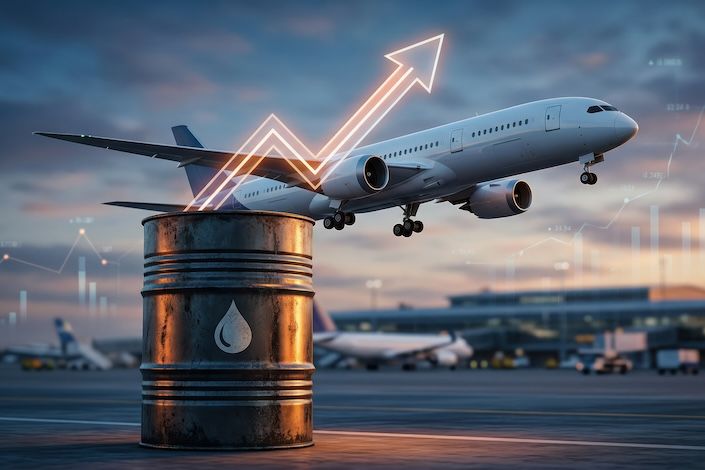
Europe has “maybe six weeks or so (of) jet fuel left,” the head of the International Energy Agency said Thursday in a wide-ranging interview, warning of possible flight cancellations “soon” if oil supplies remain blocked by the Iran war.
IEA Executive Director Fatih Birol painted a sobering picture of the global repercussions of what he called “the largest energy crisis we have ever faced,” stemming from the pinch-off of oil, gas and other vital supplies through the Strait of Hormuz.
“In the past there was a group called ‘Dire Straits.’ It’s a dire strait now, and it is going to have major implications for the global economy. And the longer it goes, the worse it will be for the economic growth and inflation around the world,” he said.
The impact will be “higher petrol (gasoline) prices, higher gas prices, high electricity prices,” Birol told the AP, speaking in his Paris office looking out over the Eiffel Tower.
Economic pain will be felt unevenly and “the countries who will suffer the most will not be those whose voice are heard a lot. It will be mainly the developing countries. Poorer countries in Asia, in Africa and in Latin America,” said the Turkish economist and energy expert who has led the IEA since 2015.
But without a settlement of the Iran war that permanently reopens the Strait of Hormuz, “Everybody is going to suffer,” he added.
“Some countries may be richer than the others. Some countries may have more energy than the others, but no country, no country is immune to this crisis,” he said.
Without a reopening of the waterway, some oil products may dry up, he warned.
In Europe, “I can tell you soon we will hear the news that some of the flights from city A to city B might be cancelled as a result of lack of jet fuel,” he said.
Birol spoke out against the so-called “toll booth” system that Iran has applied to some ships, letting them travel through the strait for a fee. He said allowing that to become more permanent would run the risk of setting a precedent that could then be applied to other waterways, including the vital Malacca Strait in Asia.
“If we change it once, it may be difficult to get it back,” he said. “It will be difficult to have a toll system here, applied here, but not there.”
“I would like to see that the oil flows unconditionally from the point A to point B,” he said.
Birol said more than 110 oil-laden tankers and more than 15 carriers loaded with liquified natural gas are waiting in the Persian Gulf and could help ease the energy crisis if they could escape through the Strait of Hormuz.
“But it is not enough,” he added.
Even with a peace deal, strikes on energy facilities means it could be many months before pre-war production levels are restored, he said.
“Over 80 key assets in the region have been damaged. And out of these 80, more than one third are severely or very severely damaged,” he said.
“It will be extremely optimistic to believe that it will very quick,” Birol said. “It will take gradually, gradually, up to two years to come back where we were before the war.”
By: The Associated Press